There are many choices out there the paleo diet the keto diet the low carb diet the low fat diet the high protein diet intermittent fasting and on and on.
Port a cath placement steps.
Removes the obturator once the catheter is in your bladder.
In preparation for the procedure the patient will be.
Port a cath placement at vascular health institute in dallas tx.
Cleans the insertion area and stitches up the opening.
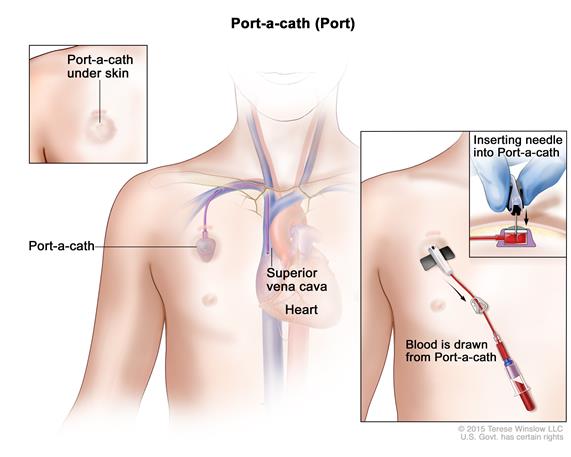
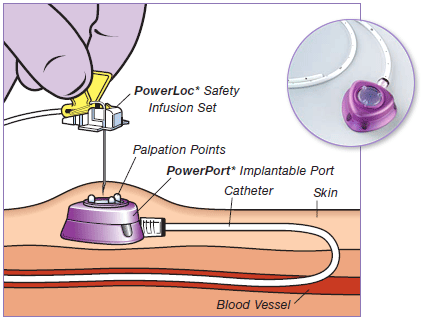
The port is accessed by puncturing through the overlying skin with a huber needle.
You will get medication through your iv that will make you feel drowsy.
It seems that everyone is trying to lose weight these days.
To administer treatment or to withdraw blood the skin over the port is sterilized.
A port a cath also referred to as a port is an implanted device which allows easy access to a patient s veins.
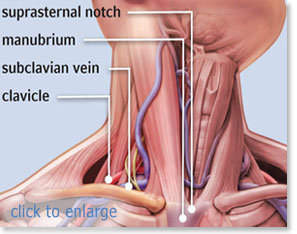
There are multiple ways that one can measure the length of the chest port catheter to ensure that its tip will sit in the correct location in the atrial caval junction.
Your doctor or nurse will tell you how to prepare for it.
Your port will be placed either in interventional radiology or in the operating room.
A picc line is a long thin flexible tube catheter that is placed into one of the large veins of your arm above the bend of your elbow.
Before the procedure you will have an iv line placed in your arm.
Porta a cath placement.
Inflates a balloon at the end of the catheter with water to keep it from falling out.
In medicine a port is a small medical appliance that is installed beneath the skin.
Learn port or picc line placement procedures here.
With an arm placement the catheter also links to a vessel just above the heart but depending on where the port is placed it may require a longer catheter.
The needle is specially designed so that it will not damage the silicone septum.
A port a cath is surgically inserted completely beneath the skin and consists of two parts the portal and the catheter.
After establish vascular access where the location of the incision for the placement of the chest port should be marked.
Blood is sucked back to check if the port is functioning normally.
The procedure to implant a portacath takes about half an hour and is performed by an interventional radiologist.