Access away from roof edges.
Osha roof hatch clearances.
Take a look at any changes in roof elevation that you have.
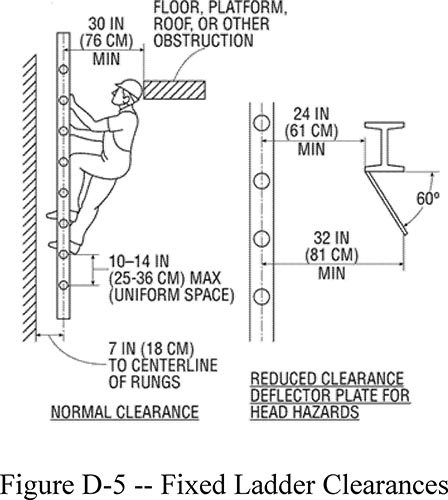
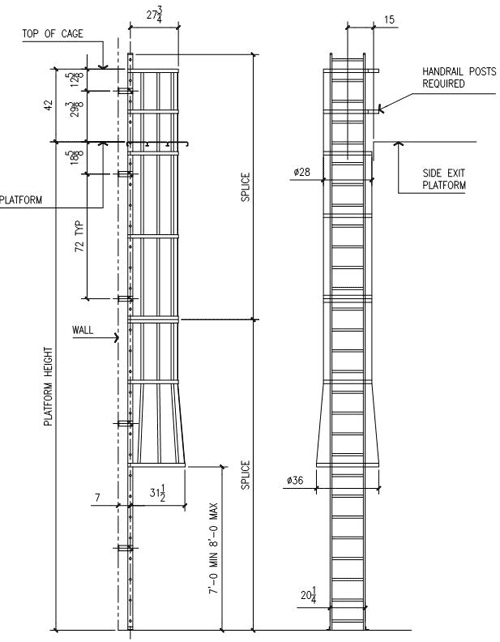
A minimum perpendicular distance of 30 inches 76 cm from the centerline of the steps or rungs to the nearest object on the climbing side.
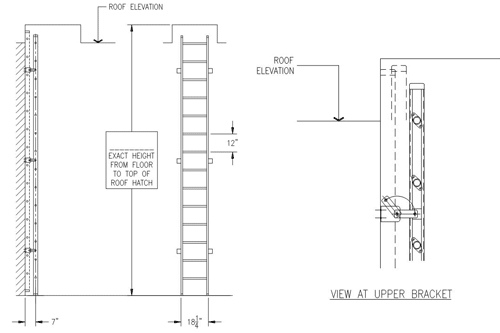
With the required clearance behind the ladder of 7 that leaves only 29 of clearance for the operator to climb through.
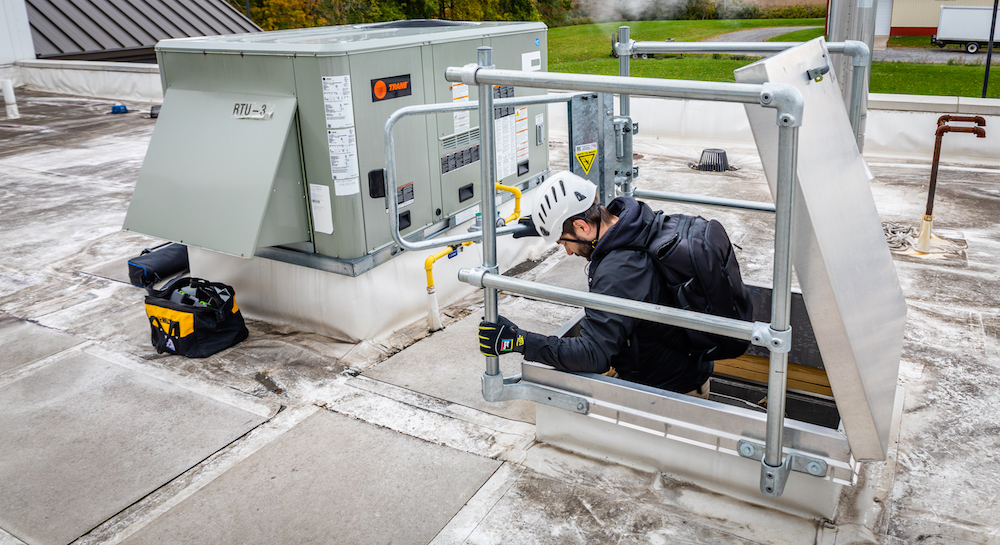
Roof hatches should be located a minimum of 10 feet from roof perimeters and oriented to direct traffic away from a roof edge or perimeter the hinge side of a hatch should be toward the closest edge.
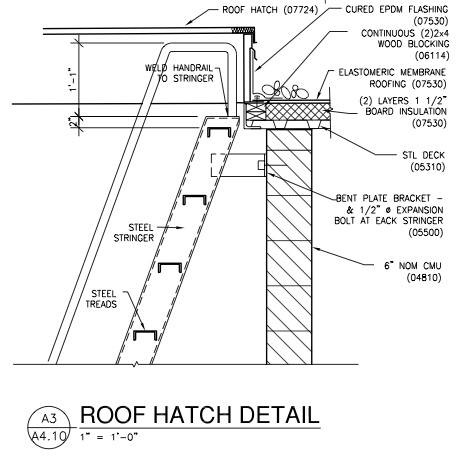
A common size of roof hatch is 36 x 30 for ladder access to the roof however that size does not meet this osha standard.
Ladders without cages or in wells should have at least 15 inches clear in each direction from the center of the ladder.
Osha clearance requirements regulate the amount of empty space that must be left around ladders in workplaces.
The climbing side of the ladder should have at least 36 inches from the center of the rungs for a slope of 76.
Grab bars not required at hatch exits.
When unavoidable obstructions are encountered the minimum clearance at the obstruction may be reduced to 24 inches 61 cm provided deflector plates are installed see figure d 5 of this section.
07 12 2000 1910 23 osha requires fall protection for elevator work when a fall hazard is present.
With the required clearance behind the ladder of 7 that.
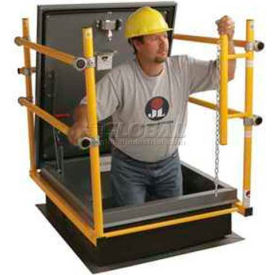
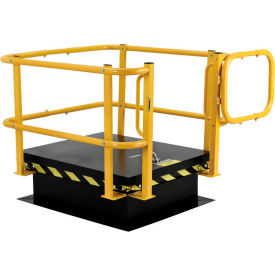
1910 23 open roof hatches should be protected.
Hatches equipped with inclined stairs or ships ladders are preferred over fixed vertical ladders.
Either a deflector plate can be added to the back edge of the opening at an angle of 60.
A common size of roof hatch is 36 x 30 for ladder access to the roof however that size does not meet this osha standard.
It states that every ladder way floor opening or platform shall be guarded by a standard railing with standard toe board on.
So here s a quick and easy by the numbers guide for distances that come into play when discussing rooftop safety on flat or low slope rooftops.